Ceremonies & special dates
Bali has a ceremony somewhere every day of the year. Here is what the big ones look like, when they fall, exactly what to do when you come across one in the street, and the handful you should plan a trip around.
How the Balinese calendar works
Why the dates move, and why there is always something on.
- Bali runs on three calendars at once: the 210-day pawukon cycle (Galungan, Kuningan, Saraswati, the Tumpek days), the lunar-solar saka calendar (Nyepi, Purnama full moons, Tilem new moons), and the Gregorian calendar for everything official.
- That means most festival dates move every year, and the big ones come round roughly every seven months rather than annually.
- Purnama (full moon) and Tilem (new moon) each month bring extra temple activity, more traffic near temples, and more people in white.
- Every temple also has its own odalan — an anniversary celebrated every 210 days. With thousands of temples on the island, there is a ceremony happening somewhere every single day.
- Check dates locally before booking anything important: your villa staff, driver, or any Balinese calendar app will know.
The ceremonies you will encounter
What each one looks like, what it means for you, and how to handle it.
Nyepi — Day of Silence
March, once a yearThe single biggest date in Bali. The night before, villages parade huge, grotesque papier-mache demon statues (ogoh-ogoh) through the streets with gamelan and torches, then burn or dismantle them. The next day the entire island shuts down for 24 hours.
What it means for the island: No flights in or out, airport closed, no vehicles on the roads, shops and beaches closed, no work, no cooking fires in traditional households. Street lights stay off and pecalang (village wardens) patrol.
What you should do: Stay inside your accommodation the whole day. Hotels keep serving food but ask you to keep noise down, curtains drawn after dark, and lights low. Internet and mobile data are usually switched off island-wide. Stock snacks and download entertainment the day before.
Galungan
Every 210 daysAncestral spirits return to earth. Every home and business installs a penjor — a tall, arching decorated bamboo pole — along the street, which makes the whole island look extraordinary for two weeks. Families dress in ceremonial white and gold and move between family temples all day.
What it means for the island: It is the most important family celebration of the Balinese year. Many staff take leave, some warungs and shops close for a day or two, and the roads around temples are jammed morning and evening.
What you should do: A wonderful time to be here if you can handle reduced service. Drive early or late, ask your villa about staff availability, and never damage or drive into a penjor.
Kuningan
10 days after GalunganThe closing of the Galungan period, when the ancestors return to the heavens. Yellow rice offerings (the name comes from kuning, yellow), and ceremonies concentrated in the morning — traditionally everything must be finished by noon.
What it means for the island: Another full ceremonial day with heavy temple traffic and closures.
What you should do: Go temple-watching in the morning rather than the afternoon; by lunchtime it is over.
Melasti
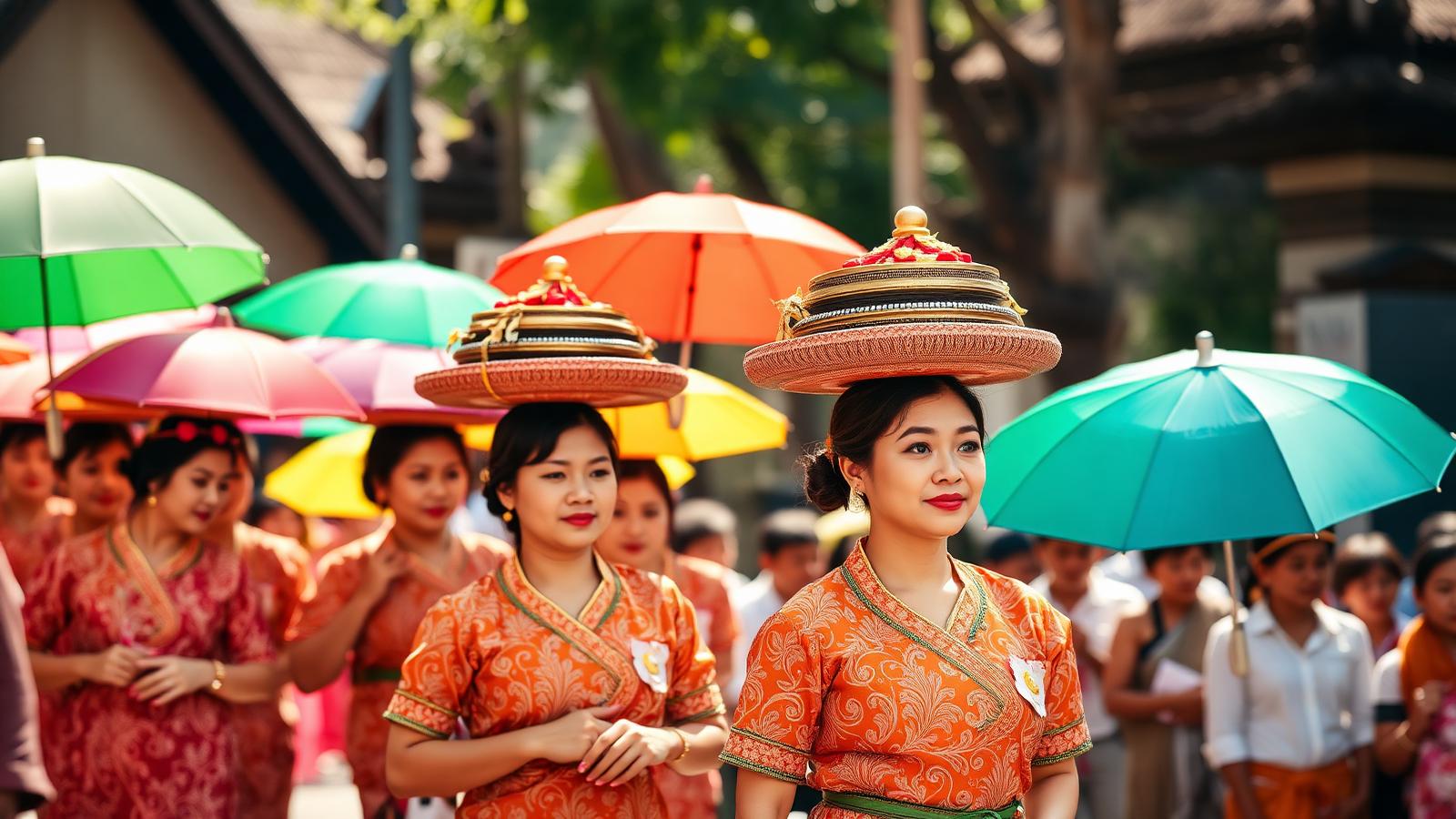
3–4 days before NyepiEnormous processions carry temple heirlooms to the sea or a holy spring for purification. Hundreds of people in white, umbrellas, gamelan, and offerings, walking to beaches like Petitenget, Masceti, Sanur and Kuta.
What it means for the island: One of the most photogenic and moving events of the year, and completely public.
What you should do: Watch from the side, stay out of the procession's path, do not walk between worshippers and the sea, and never use flash. Roads to the coast close intermittently.
Saraswati
Every 210 daysThe day of knowledge and learning. Books, manuscripts and shrines are blessed; students in uniform fill the temples; offerings are placed on libraries and desks.
What it means for the island: Schools hold ceremonies rather than lessons.
What you should do: A gentle, low-key day. Reading is traditionally paused out of respect for the books being blessed.
Pagerwesi
4 days after Saraswati'Iron fence' — a day of spiritual fortification against negative forces. Strongest in north Bali, where it is celebrated almost as widely as Galungan.
What it means for the island: Family temple ceremonies and offerings at home.
What you should do: Mostly private; you will notice offerings and white clothing rather than street processions.
Odalan — temple anniversaries
ConstantEach temple's own birthday, every 210 days. Multi-day affairs with gamelan, masked topeng dance, offerings stacked metres high, and the whole village in ceremonial dress. Often runs late into the night.
What it means for the island: This is the ceremony you are most likely to stumble across without planning to.
What you should do: Visitors are usually welcome to watch respectfully from the outer courtyard if you are in a sarong and sash. Ask before entering.
Ngaben — cremation
Occasional, unmissableA funeral is a celebration, not a mourning. Towering bamboo cremation towers (bade) and animal-shaped sarcophagi are carried through the streets by dozens of men, deliberately spun at crossroads to disorient the spirit, accompanied by gamelan and crowds.
What it means for the island: Mass cremations are held periodically in villages so poorer families can share costs. Roads close entirely while the tower passes.
What you should do: Foreigners are generally welcome to watch. Dress properly, stand back, ask before photographing faces, and do not attempt to join the procession. Never overtake or cut through a cremation procession in a car or on a bike.
Purnama & Tilem
Full & new moon, monthlyExtra offerings, temples busy from before dawn, and lots of people in white on the roads. Purnama Kedasa (the tenth full moon, around April) is especially large.
What it means for the island: Expect temple traffic and busier roads on these mornings.
What you should do: Good, low-pressure days to see a temple in genuine use — arrive early and stay in the outer courtyard.
Tumpek days
Six times per cycleBlessing days for different parts of life: Tumpek Landep for metal objects and tools (you will see cars, scooters and laptops decorated with offerings), Tumpek Kandang for animals, Tumpek Wariga for trees and plants.
What it means for the island: Charming and very visible — your driver's car will have a fresh offering on the dashboard.
What you should do: Nothing to do but enjoy it. Compliment your driver on the decorations.
Canang sari — the daily offering
Every single daySmall palm-leaf trays of flowers, rice and incense placed on shrines, pavements, doorsteps, dashboards and beaches, several times a day.
What it means for the island: This is the ceremony you interact with most, without noticing.
What you should do: Never step on one. If you accidentally do, it is not a disaster — apologise and move on. Do not kick them aside or pick them up.
You have walked into a ceremony — now what?
The rules are simple, and getting them right is genuinely appreciated.
Watch, do not participate. Cover up, stand back, stay quiet.
A ceremony is a religious act, not a performance being staged for visitors. You are almost always welcome to observe — Balinese Hinduism is remarkably open — but only on the community's terms.
- Stop and wait. If a procession is coming, pull over, switch off your engine, and let it pass completely. Never drive through, overtake, or weave between people.
- Dress before you approach: sarong and a sash (selendang) tied at the waist, shoulders covered, for anyone entering a temple area. Many temples lend them at the gate for a small donation.
- Stand lower than the priest. Never position yourself higher than the officiating priest or the offerings — that includes standing on walls, steps or a scooter for a better photo angle.
- Do not walk in front of someone who is praying. Go behind them, always.
- Ask before photographing. Most people will say yes. No flash, no drones over a ceremony, and no cameras pushed into faces during prayer.
- Women who are menstruating are traditionally asked not to enter temple grounds. It is a widely posted rule and it is taken seriously.
- Do not join in unless you are explicitly invited. If you are invited, follow the person next to you and accept the holy water and rice on your forehead with both hands.
- Keep your voice down, keep your feet off shrines and offerings, and never point with your feet or touch anyone's head.
- Do not hand or receive things with your left hand.
- If your driver or villa staff apologise for being unavailable on a ceremony day, that is normal and not negotiable — plan around it.
Dress code, in one card
Keep this in your scooter seat.
- Sarong covering the ankles, for men and women alike.
- Sash (selendang) tied around the waist over the sarong — this is the part visitors forget.
- Shoulders and upper arms covered. No singlets, no crop tops, no beachwear.
- White or light colours for a ceremony you have been invited to; anything modest for casual temple visits.
- Shoes off where signage or a shoe rack indicates, and always inside inner courtyards.
- Hats and sunglasses off during prayer.
What not to miss
Worth timing a trip around.
Ogoh-ogoh parade, the night before Nyepi
Genuinely one of the great street spectacles in Asia. Every village builds monsters for months, then parades them at dusk with drums and fire. Best in Denpasar, Ubud and any village square. Free, chaotic and unforgettable.
Penjor season at Galungan
Ride any village road in the week around Galungan and the entire island is lined with arched bamboo poles. Late-afternoon light, empty back roads inland from Ubud, and you have the best photography Bali offers.
A Melasti procession to the sea
Hundreds in white walking to the beach with parasols and gamelan, a few days before Nyepi. Petitenget, Masceti and Sanur are the accessible ones. Stand well back on the sand.
A village odalan you were not looking for
The best ceremony you will see is the one you stumble on. If you pass a temple with gamelan and a crowd, park, put on a sarong, and ask politely if you may watch. The answer is usually a smile and a wave in.
Kecak at sunset, Uluwatu
Performance rather than ceremony, but the fire-and-chant Ramayana on the clifftop at Uluwatu is worth the crowd. Around IDR 150k. Arrive an hour early for a seat, and mind the monkeys.
Temple festivals at Besakih and Batukaru
The mother temple on Agung's slopes and the quieter mountain temple at Batukaru both host major festivals. Besakih needs a guide and patience with touts; Batukaru is calmer and far less commercial.
Planning around ceremony days
- Nyepi: do not fly in or out on that date under any circumstances — the airport genuinely closes for 24 hours.
- Book drivers and tours a week ahead around Galungan and Kuningan; many drivers simply will not work those days.
- Some restaurants, spas and shops close for one to three days during Galungan. Ask before you plan a special dinner.
- Roads near temples become one-lane or fully closed at short notice. Add an hour to any journey on a ceremony day.
- Keep a sarong and sash in your bag or scooter seat permanently — you will need them with no warning.
- Carry small notes for temple donations, typically IDR 10k–50k.
Checking dates: because most festivals follow the 210-day pawukon cycle, published dates shift every year. Ask your villa staff or driver for the next Galungan, Kuningan and Nyepi dates before you lock in flights or a special dinner — they will know off the top of their head.