Home & utilities
What it actually costs to run a place in Bali, how the electricity tokens and water pumps work, and the questions that save you from a bad lease.
Before you sign
Twenty minutes of questions now prevents a year of arguments.
- Is electricity included, or metered? What is the meter capacity (daya)?
- Is water PDAM, well, or both — and who repairs the pump?
- Is there an active fibre line, and what speed does it actually test at?
- Who pays for pool chemicals, the gardener and rubbish collection?
- What is the deposit, and exactly what conditions return it?
- Is the owner the actual owner? Ask to see the certificate, and use a notary for anything longer than six months.
- Is the building legally permitted (IMB/PBG)? Unlicensed builds do get sealed.
Each utility, in practice
Electricity (PLN)
Biggest billTwo systems: prepaid token meters (you buy a 20-digit token via Tokopedia, GoPay or a minimart and key it in) and postpaid billing.
Typical monthly cost: IDR 500k–1m for an apartment with light AC use, IDR 1.5m–4m for a villa running AC overnight plus a pool pump.
Check the meter capacity (daya) before renting — 1300VA will trip constantly if you run two ACs, a kettle and a pump. 3500VA+ is comfortable for a villa.
Photograph the meter reading on move-in day and keep it. Disputes over 'previous tenant' usage are common.
Water
Check the sourceHomes run on PDAM town supply, a private well with a pump, or both. Well water is free but pressure and quality vary, and pumps fail.
PDAM bills are small — usually IDR 100k–300k a month.
Never drink from the tap. Order 19L galon refills (IDR 20k–25k delivered) or fit a filter system.
Ask who pays when the pump dies. It should be the owner; get it in writing.
Internet
Test it firstIndiHome (Telkom), Biznet and MyRepublic cover most of the south and Ubud. Packages run IDR 300k–700k a month for 50–300 Mbps.
Installation can take one to three weeks and some streets simply have no fibre — confirm the property already has an active line if you work online.
Have a backup: a Telkomsel data SIM as a hotspot, plus a co-working membership (IDR 1m–2.5m a month) for outage days.
Test speed standing in the room you'll work in, not at the gate.
Rubbish and recycling
Local systemCollection is usually organised by the banjar, IDR 50k–150k a month, two or three pickups a week.
Separate organic and plastic; services like Eco Bali will collect sorted recycling for a fee.
Never burn rubbish — it's common, it's toxic, and it makes you the neighbour everyone resents.
Gas
CookingMost kitchens run on a 12kg LPG cylinder (IDR 200k–250k, delivered and swapped the same day) rather than piped gas.
Keep a spare. Cylinders always empty mid-cook, usually on a Sunday.
Pool, garden and cleaning
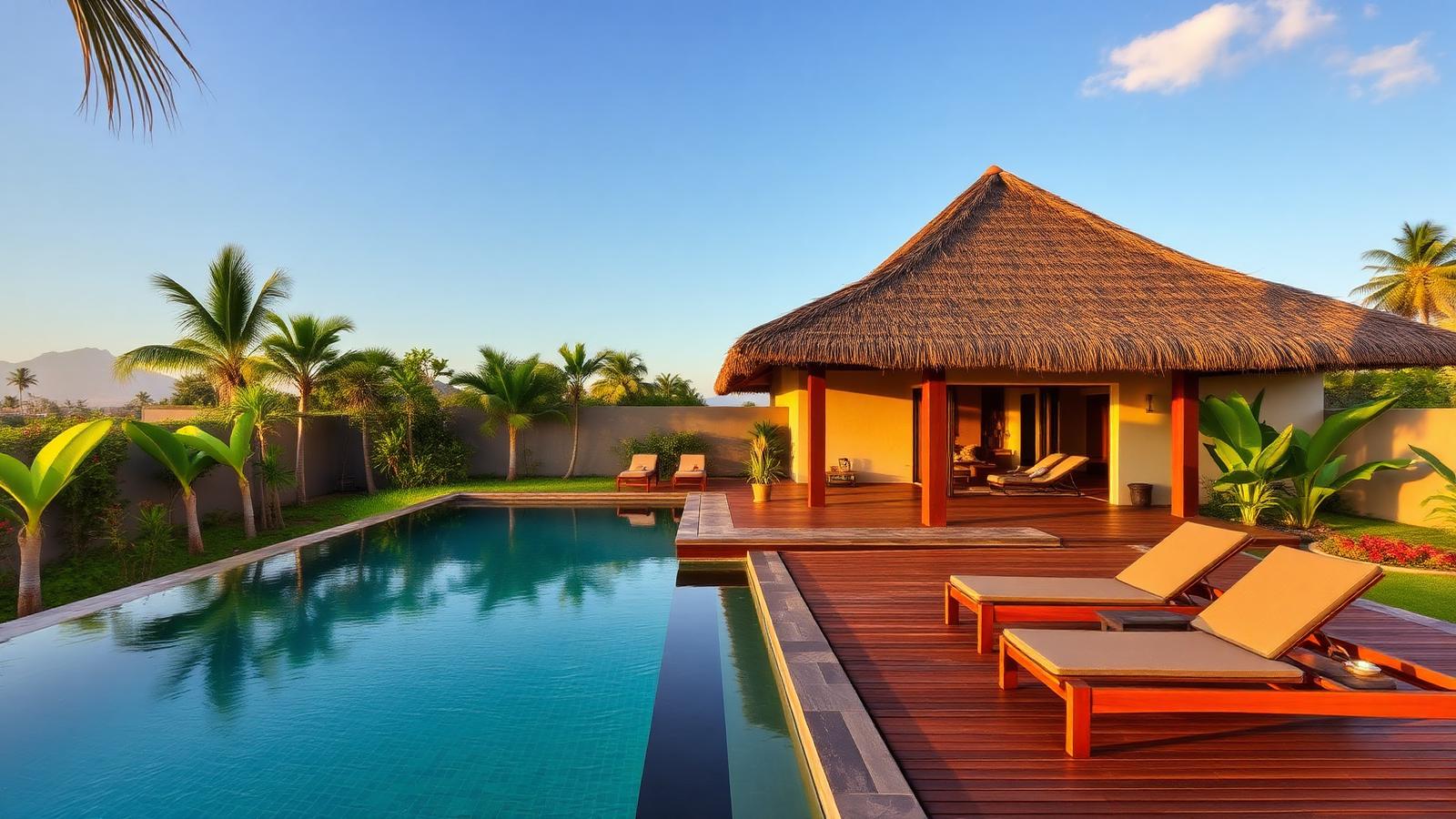
Villa lifePool service is IDR 500k–1m a month including chemicals; a gardener a few days a week is IDR 1m–2m.
A daily cleaner is roughly IDR 1.5m–3m a month full-time, less for a few mornings a week.
Clarify in the lease whether these staff are included and who directs them — the owner's staff are not automatically yours to reassign.
Living with the climate
- Damp is the enemy: run AC or a dehumidifier in wardrobes, and keep leather and electronics off the floor in wet season.
- Ants, geckos and the occasional snake come with tropical gardens. Keep food sealed and grass short.
- Wet season (Nov–Mar) brings power cuts and flooded lanes — keep a torch, a power bank and a bucket of water for when the pump has no power.
- Nyepi (Balinese day of silence) means no lights visible outside, no traffic and no airport for 24 hours. Stock food and water the day before.